
Explore Meta NFT Marketplaces: The Future Art World

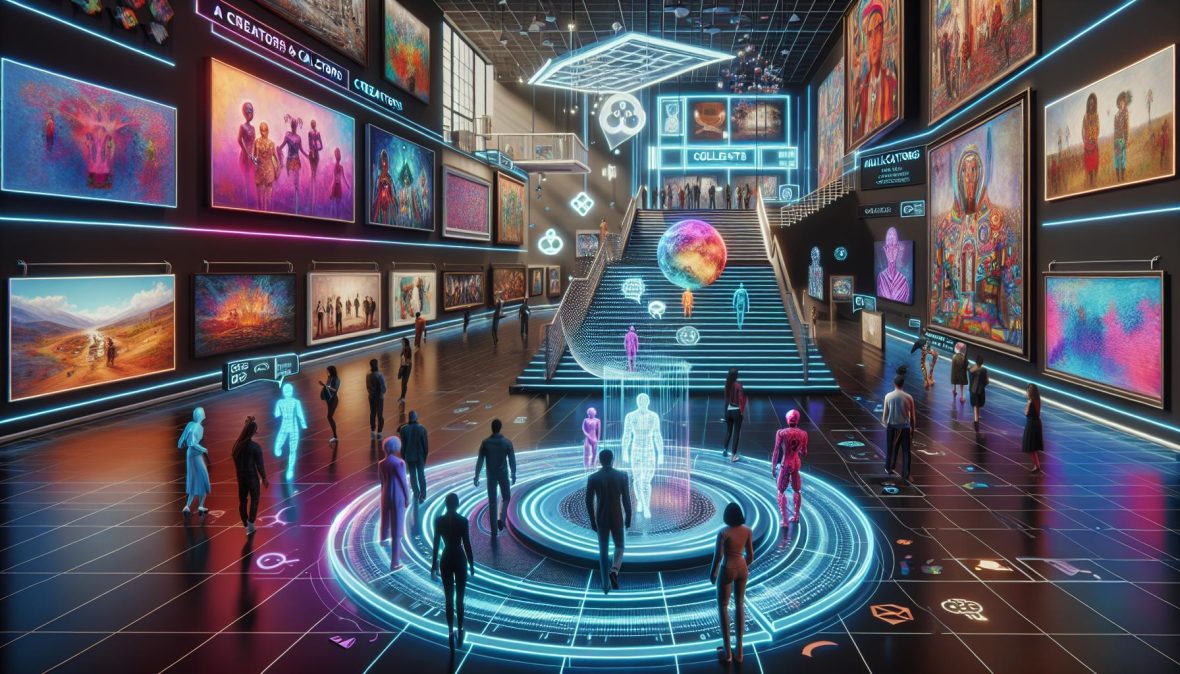
Meta NFT marketplaces sit at the point where digital art, virtual worlds and blockchain technology meet. Instead of scrolling a flat grid of listings, you move through an environment, stand in front of a work, and buy it where it hangs. If you have wondered what separates one of these venues from an ordinary NFT marketplace, the short answer is the setting you trade in and the plumbing underneath it.
Key Takeaways
- A meta NFT marketplace is a digital platform combining art and cryptocurrency, letting artists and collectors trade non-fungible tokens inside a metaverse or virtual reality setting.
- Its value in the crypto world comes from blockchain integration that adds security, transparency and functionality, turning the act of buying digital art into an immersive experience.
- It differs from a traditional NFT marketplace through its trading mechanics, notably smart contracts and blockchain integration, and through the wider range of digital assets on offer.
- Platforms discussed here include Decentraland, CryptoVoxels and OpenSea, alongside newer arrivals such as The Sandbox, Somnium Space and Rarible.
- Meta NFT art represents artwork in tokenised form on a blockchain, shifting how ownership works and how artists are rewarded.
- Returns can be attractive, but market volatility, hacking and fraud, unsettled regulation and technical barriers all cut the other way.
Overview of Meta NFT Marketplace
What Is a Meta NFT Marketplace?
A meta NFT marketplace is a digital platform that allows creators, artists and collectors to trade non-fungible tokens within a virtual reality or metaverse setting. Unlike a typical NFT marketplace, it folds blockchain machinery such as smart contracts and tokenomics into a three-dimensional virtual world. Coin projects, token launches and smart contracts are the working parts of that ecosystem.
Think of metaverse projects such as Decentraland or CryptoVoxels. Artists can build digital galleries showing their NFT art; collectors walk those immersive landscapes, interact with the pieces and buy directly. If blockchains themselves are new to you, a primer on how blockchains work, their benefits and limitations, and common applications beyond cryptocurrency is a sensible first stop before you spend anything.
Why Meta NFT Marketplaces Matter in the Crypto World
These venues change the level of interaction involved in buying, selling and trading NFTs. Blockchain integration adds security, transparency and functionality, and the virtual reality layer thins the line between the physical and the digital. Buying art stops being a checkout flow and becomes something closer to a social occasion.
That shift pulls neighbouring sectors along with it: crypto gaming, DeFi platforms and digital asset management all feel the effect, which in turn puts more weight on wallet security. The net result is a wider field of blockchain application, where the digital layer is not a separate universe but part of the one you already live in.
Features of a Meta NFT Marketplace
A meta NFT marketplace keeps the qualities you expect from any NFT, uniqueness and provable ownership, then pairs them with immersive environments, a broader asset mix and distinctive trading mechanics.
Range of Assets
The catalogue runs wider than art alone. You will find coin projects and derivatives, one-off digital artworks, virtual real estate and exclusive digital collectibles, all created inside the metaverse. On a marketplace tied to a crypto gaming platform, the tokens may be game items, characters or land parcels rather than pictures. Pricing on these assets leans on tokenomics analysis rather than on any single catalogue price.
Unique Trading Mechanics
Trading here leans heavily on smart contracts and blockchain integration. A sale triggers the attached smart contract, which handles the transaction automatically. Marketplaces also borrow features from DeFi platforms, while wallet security measures are what stand between your holdings and a bad afternoon. Each new token launch tends to widen the choices available inside the world.
What the Token Actually Stores
One detail trips up almost every new buyer: the token and the thing you look at are not the same object. NFT metadata is the descriptive information that tells software what an NFT is supposed to represent, and without that metadata an NFT is usually just a token contract. A walkthrough of how NFT metadata works makes the same point from the technical side: metadata is used on the blockchain to provide additional information about an asset.
That matters more in a metaverse than on a plain marketplace, because your purchase has to render somewhere. A published use case document on NFT metadata for the metaverse sets out the general needs and considerations for metadata that enable assets to be discoverable, portable and verifiable. Discoverable, portable and verifiable are three words worth keeping in mind whenever you are weighing an item meant to live inside a virtual world.
Examining Noteworthy Meta NFT Marketplaces
Top Performing Platforms
Decentraland. Blockchain integration lets artists and creators trade NFTs inside a virtual environment, and its ecosystem spans digital art, virtual assets and land parcels. Trading runs on smart contracts, which is what makes transactions secure and transparent.
CryptoVoxels. The emphasis falls on immersive play and creativity, with tokenised assets ranging from game items to artworks, and blockchain integration providing transactional safety.
OpenSea. A broad marketplace covering virtual real estate, artworks and custom game assets, with an integrative approach to DeFi platforms and a strict line on wallet security.
Emerging Platforms to Watch
The Sandbox. A clean interface and a diversified asset range, with a crypto gaming angle that lets in-game assets be tokenised and traded.
Somnium Space. Blockchain integration supports an engaging, immersive experience, and the platform is known for a rigorous approach to wallet security.
Rarible. An open, accessible space for digital artists and collectors, built around tokenisation but also around social interaction.
Newer marketplaces tend to fly under the radar at first. Their approach to tokenomics and user experience is what decides whether they stay there.
Deeper Dive into Meta NFT Art
Significance of Art in the Meta NFT Market
Traditional art exists in physical form. Meta NFT art represents a work in tokenised form on a blockchain, made for virtual reality environments and crypto gaming worlds. Inside an interactive space such as Decentraland or Somnium Space, that difference becomes obvious: with smart contracts and blockchain integration behind them, pieces stop being static visuals and become programmable, interactive assets. A work that shifts its patterns in response to conditions around it is not something a canvas can do.
Coin projects such as Decentraland also let artists build and host digital galleries, which changes how exhibitions work. A visitor puts on a headset and steps into the space from anywhere, so physical distance no longer decides who attends.
The Impact of Meta Art on the Traditional Art Market
The first tremor was in ownership itself. Traditional art restricts possession; tokenised art spreads it. On a marketplace such as Rarible, an artist can issue multiple tokenised copies of a work that collectors anywhere can buy.
The move from physical object to token keeps driving change. Art pieces behave as digital assets, with easier liquidity than a canvas in storage, and the audit trail left by the blockchain adds provenance transparency that the traditional market never offered.
Moreover, the influence on how artists earn from resales has been empowering. Artists long struggled to profit when their work changed hands again; royalties encoded into smart contracts mean a share flows back every time a piece sells on the secondary market.
Meta art also reaches past pictures into environments, avatars and accessories across crypto gaming worlds, which opens more commissions and more room to experiment.
Investing in Meta NFTs: Opportunities and Risks
Potential Returns
Immersive experience plus blockchain infrastructure has drawn money into this market, and collectible digital art and virtual real estate can appreciate. For instance, Decentraland plots, pieces of virtual land inside the world, trade as virtual property, and what they fetch moves with demand for space there rather than with any fixed schedule.
Some NFTs also generate recurring revenue through fees or royalties. Smart contracts embedded in a transaction make sure creators take their share each time a work trades again.
Risks and Challenges
Volatility comes first. Prices swing hard, and a token that looks promising can lose most of its value quickly. Despite the guarantees blockchains provide, hacking and fraud remain live problems across the digital currency space, and wallet security helps without being foolproof.
Legal and regulatory questions add another layer, since token launches often sit in a grey area of oversight, and that uncertainty is itself a cost. Finally, the technical knowledge needed to use crypto gaming platforms, DeFi products or smart contracts safely is a genuine barrier to entry. None of that argues against participating; it argues for understanding what you are holding before you hold much of it.
Conclusion
Meta NFT marketplaces are changing how digital assets are bought and traded, and how people meet each other while doing it. They give trading a dynamic, transparent setting, they differ from traditional NFT marketplaces in both mechanics and asset range, and they pull crypto gaming and DeFi along in their wake.
You have also seen the other half of the picture: rewards and risks sit side by side. Keep exploring, keep checking what a token actually points to, and let the pace of your commitment match the pace of your understanding.
Frequently Asked Questions
What is a meta NFT marketplace?
An online platform for trading non-fungible tokens inside a virtual reality environment, integrating blockchain technologies such as smart contracts within a metaverse setting.
How do meta NFT marketplaces differ from traditional ones?
Traditional marketplaces provide a place to buy, sell and trade NFTs. Meta NFT marketplaces add a virtual reality environment wired to blockchain solutions, so the experience is immersive rather than transactional.
Why do they matter in the crypto domain?
They lift security, transparency and functionality, turn trading into a social experience, and influence adjacent sectors such as crypto gaming.
What are their unique features?
Immersive environments for trading a diverse asset range, from digital art to virtual real estate and game items, resting on smart contracts and blockchain integration.
Which platforms are worth knowing?
Decentraland, CryptoVoxels and OpenSea among established names, with The Sandbox, Somnium Space and Rarible drawing attention for user engagement and tokenomics.
How does meta NFT art change traditional art?
It exists in tokenised form on a blockchain, optimised for virtual environments. That enables interactive, programmable pieces, widens ownership and gives artists income through royalties encoded in smart contracts.
What are the investment risks?
Market volatility, security issues, unsettled regulation, and the technical expertise required to navigate the space safely.
What is the future of meta NFT marketplaces?
As digital and physical experience keep converging, these venues look set to hold a real place in the wider coin ecosystem and in how digital art is traded.
